Showing posts with label Sales. Show all posts

February 3, 2014

The Real Value of Social Media Hinges On These 3 Words


By Patrick Mahan

I just received this question on Google+
"Would you say the value of social media is more in improving general brand awareness rather than directly generating sales?"
I would say the real value of social media is none of the above (improving brand awareness or directly generating sales).

The real value of Social Media hinges on three words:

  • Familiarity
  • Affinity
  • Trust

We'll dig into those more in a minute. But first, I'd like to address the question and give my opinion on the real value of Social Media.

Increasing Brand Awareness?


As you know, people are bombarded with commercial messages all day, every day. The last thing they want is more noise in their Social Media streams from brands trying to sell them something.

I would not recommend using Social Media as a bullhorn, or another broadcast platform to yell at people in a moment they don't want to be yelled at ... about things they don't want to hear about ... in hopes of increasing awareness of your brand.

If you believe lack of awareness is the problem, then Social Media is not the solution.

Social Media is about connecting with people and building relationships. It's about making friends, not sales. It's about educating and entertaining. It's about knowing your audience and delivering valuable content that is personal, timely and relevant to that audience.

It's an opportunity to turn strangers into friends. And then - once you earn their attention (Note: There is a BIG difference between attention and awareness) - you have the opportunity to turn those friends into customers... and eventually into advocates.

And that is the ultimate goal. Advocates. Fans. Loyal customers. Why? Because loyal customers are the world's greatest salespeople. And your company's greatest asset. When you have a devoted group of followers, they do the selling for you. They sing your praises. They spread the word. And "awareness" is no longer an issue.

In fact, I would say that Awareness is never the problem. Awareness is a symptom. A symptom that your product or service isn't worth talking about.

So try this ... make something remarkable. A product or service that people can't wait to experience again. And they can't wait to share that experience with their friends and family. If you focus on that, then I believe you will find the 'awareness issue' will take care of itself.

Directly Generating Sales?


I'm a big believer in the idea that you must sow before you reap. You should always give people something of value first before you ask for anything in return. And Social Media gives you the ability to do that at a scale that was never before possible.

But first, you have to get comfortable with the idea of giving your knowledge away for free. That is what people want and expect from brands on Social Media. They don't want to be pitched. They want to be educated and entertained. They want coupons, discounts, exclusive opportunities, and incentives. In short, they want to get to know you first, before they buy from you.

So use Social Media to build rapport and establish your authority and expertise. Then, when the people consuming your content are ready to make a purchase, you will have positioned yourself as the go-to source.

But even then, I wouldn't recommend using Social Media to directly generate sales. Use it as a tool to gently guide prospects further down the sales funnel. Then, when the time is right, direct them to your website (preferably a landing page) where you will give them an opportunity to place an order.

Familiarity, Affinity and Trust


Social Media is all about building relationships. And all relationships are built upon these three words ... Familiarity, Affinity and Trust.

Since the beginning of time, people have made it clear that they prefer to do business with people they know (Familiarity), like (Affinity) and trust.

All three are elements of Rapport. And that should be your ultimate goal in Social Media ... building Rapport, not collecting "Likes".

Social Media gives you an opportunity, like never before, to get to know your customers - and potential customers - on a personal level. An opportunity to become more than a faceless corporation.

"If you would win a man to your cause, first convince him that you are his sincere friend. Therein is a drop of honey that catches his heart, which, say what you will, is the great high-road to his reason, and which, when once gained, you will find but little trouble in convincing his judgment of the justice of your cause." - Abraham Lincoln

Social Media is a place to make friends, not sales. A place to create relationships, not transactions. But if done right - and with sincerity - those friendships can certainly lead to sales. Lots of sales. Because at the end of the day, Social Media is just a new spin on an old concept ... Word-of-Mouth Marketing. Treat customers right. Give them something worth talking about. And they will spread the word. Social Media just gives them a much louder voice.

So step out from behind the corporate logo and speak to people in a friendly, conversational tone. This is what builds familiarity, affinity and trust ... the three things that should be top priority in your social media marketing strategy.


January 27, 2014

A Prescription For Closing More Sales


By Patrick Mahan

Salesmanship isn't what it used to be. Consumers today are more distrustful of sales people than every before. Fast-talking, slick sales people using outdated manipulation techniques are being replaced by "service professionals" who listen more than they talk.

Consumers have made their preference clear: They want to be served, not sold.

In the old days, the Sales Cycle began with the first interaction between buyer and seller. But today, with the abundance of information available to consumers online, buyers are now nearly 60% along the path to a purchase decision before they ever meet a salesperson.


Times have changed. And as consumers become more informed and more educated, the balance of power will continue to shift in favor of the buyer. 

The question is, as a salesperson and a marketer, are you adapting to these changes in consumer behavior?

I believe it all begins with re-framing the way you approach sales. 
"You know you are running a modern sales team when selling feels more like the relationship between a doctor and a patient and less like a relationship between a salesperson and a prospect.
When you go in to see your doctor and she asks you about your symptoms, you tell her the truth. You trust that she can diagnose your problem and prescribe the right medication.
When she says, "This is what you have. Take these pills," you don’t say, “Let me think about it” or “Can I get 20 percent off?” You take the medication.
It's no longer about interrupting, pitching and closing. It is about listening, diagnosing and prescribing." - Mark Roberge, SVP Sales and Services at HubSpot


I would add this...

In order for this approach to work, you must position yourself (and/or your company) as an Authority Figure. Authority is one of Cialdini's 6 Principles of Persuasion.

People follow a doctor's advice because he has established himself as an authority on the subject. An expert. A trusted advisor.

How do you establish yourself as an Authority?


  •  Write: The root of the word Authority is Author. We view authors as authorities on the subjects they write about. Blogging, YouTube videos, white papers, writing articles for magazines, etc. are all great ways to demonstrate your knowledge of a subject. And position yourself as a thought leader. The go-to expert in your industry. And Social Media gives you a platform - and an amplified voice - to spread your message like never before.

  • Testimonials: In terms of marketing, nothing in the world is more powerful than a third-party endorsement. The more endorsements you earn, the more your Authority grows.

Furthermore, endorsements provide Social Proof (another one of Cialdini's 6 Principles of Persuasion). People like safety in numbers. If everyone is doing it, then it must be okay. Now more than ever, consumers are turning to the Internet to read reviews posted by others before making a decision [*]. The more Social Proof you have backing your brand, the more your Authority grows.


[*] 90% Of Customers Say Buying Decisions Are Influenced By Online Reviews


July 23, 2013

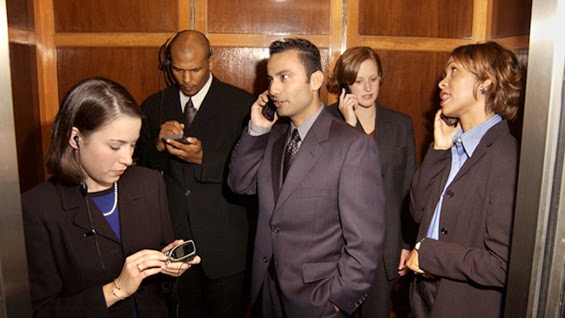
Rethinking the Elevator Pitch


Elevator Pitch

By Patrick Mahan

You never know who you might bump into. A chance encounter on an airplane could lead to your next big sale. Or the person in line behind you at the grocery store just might be the strategic business partner that helps take your brand global.

As they say, "Luck is what happens when preparation meets opportunity." The question is, how prepared are you when opportunities like these arise?

February 5, 2013

Golden Rule of Email Marketing

Golden Rule of Email Marketing

How to increase your email open rates and minimize unsubscribers.


By Patrick Mahan

Email marketing is one of the most effective and personal forms of marketing.

Why?

Because not everyone reads your industry's publications looking for your ads. Not everyone watches television at the time you run your commercials. Not everyone listens to the radio or drives past your billboard. Not everyone subscribes to your blog's RSS feed or checks your Facebook Page or visits your website each morning. But ... everyone checks their email inbox.

And that's why email marketing is so powerful. However, as they say, "With power comes responsibility." And your responsibility is to NOT wear out your welcome.


December 26, 2012

Check Below the Surface

By Patrick Mahan

Last summer, I wanted to make the grass in my front yard look like a baseball field (or golf course). I tried all kinds of strategies. Aerate, overseed, water, fertilize... but the grass wasn't growing like I wanted it to.

I asked an expert and he told me the pH balance in the soil was off. It was too acidic. He said you can try all sorts of strategies and tactics, but if the underlying chemistry isn't right, then nothing will grow.

I think this is a good business analogy. If the chemistry isn't right, nothing can grow.

So dig below the surface and look at the chemistry of your team or company. Is it acidic?

You can try all sorts of "topical treatments"... bonuses, incentives, corporate restructuring, mergers, acquisitions, new marketing campaigns, strategic planning, etc. But the real roadblock to growth and sustainability often lies below the surface.

And the solution may be changing your chemistry rather than your strategy.
"Synergy comes before strategy." - John Calipari, head coach of the University of Kentucky Wildcats, 2012 NCAA Men's Basketball National Champions

December 25, 2012

Powerful Marketing Lesson from Miracle on 34th Street


By Patrick Mahan

Miracle on 34th Street is not only a classic Christmas movie, it's also one of the most powerful marketing lessons of all-time.

In the movie, Macy's department store discovers their Santa Claus is sending customers to competitors. If Macy's doesn't have the item, or if a competitor sells it for less money, Santa Claus tells the parents where they can go to get it.

This outrages the manager of the toy department. But when Mr. Macy receives hundreds of telegrams from thankful parents expressing their gratitude for placing customers ahead of profits, Mr. Macy quickly embraces the radical new policy. The store becomes the talk of the town and sales shoot out the roof.

This is a powerful lesson in customer service, the power of word-of-mouth marketing, and the impact front-line employees can have on the success (or failure) of your brand.

Below is the dialogue from the movie...

Mr. Macy speaking to his executive team:

"On the face of it, I admit this plan sounds idiotic and impossible. Imagine, Macy's Santa Claus sending customers to Gimbels. But, gentlemen, you cannot argue with success. Look at this. Telegrams, messages, telephone calls. The governor's wife, the mayor's wife... over 500 thankful parents expressing undying gratitude to Macy's. Never in my entire career have I seen such a tremendous and immediate response to a merchandising policy. And I'm positive, if we expand our policy, we'll expand our results as well. Therefore, from now on, not only will our Santa Claus continue in this manner, but I want every salesperson in this store to do precisely the same thing. If we haven't got exactly what the customer wants, we'll send him where he can get it. No high pressuring and forcing a customer to take something he doesn't really want. We'll be known as the helpful store, the friendly store, the store with a heart, the store that places public service ahead of profits. And, consequently, we'll make more profits than ever before."

Are you brave enough to implement this "customers first" strategy? Or do you believe this stuff only works in the movies?

December 19, 2012

The Perfect Subject Line for Emails

By Patrick Mahan

Every marketer is looking for the perfect email subject line to increase open rates.

Lots of How To articles have been written on the topic. Most recommend writing subject lines that invoke curiosity. Or ask a question. Or speak directly to the reader. Or announce breaking news.

One research study concluded that the most successful subject line of all-time was the phrase: "You are not alone."

But what if we take an entirely different approach?

We spend our time and energy trying to craft creative (and sometimes deceptive) subject lines in an effort to get more people to open our emails.

But here's the thing ... you should be more concerned about the NAME that appears in the "From" line and less concerned about the CONTENT that appears in the "subject" line. 

I receive newsletters from several authors that I have come to know, like and trust. When I see their name in the From Line, the Subject Line has little influence on my decision to open their email. 

So... as usual, it all comes down to building a reputation for yourself (and/or your company) as someone people know, like and trust. Develop a reputation for delivering content that is personal, timely, relevant and valuable.

When you focus your efforts on becoming someone of value, offering something of value, then you'll discover the "subject line" is the least important part of your email marketing strategy.

December 17, 2012

Pick Any Two

By Patrick Mahan 

Instant coffee. Instant downloads. High-speed internet. One-hour cleaners. Microwave ovens. Overnight shipping... We live in the Age of Instant Gratification.


Customers want it NOW! They want it better, they want it faster - and unfortunately - they want it cheaper. 

And that puts you in a tough spot. How can you deliver higher quality, faster, friendlier service AND slash your price?

You're already bending over backwards for your customers. You're working 60 plus hours a week. And what do you get in return? Insatiable customers who want a lot more for a lot less.

So what's the answer? How do you keep up with increasing customer demands without losing your mind... and your business in the process?

Unfortunately, there's no magic bullet.  You can't be all things to all people. You can't make everyone happy, no matter how hard you try. So stop trying. How's that for an answer?!

Now you're probably thinking... "That's great. I'll be out of business in less than a week!"

But stick with me. There's a way to work through this dilemma. And it's all about MANAGING EXPECTATIONS.

You can offer the highest quality, but if you do, then you can't offer the lowest price. Or, you can offer the lowest price, but then you can't offer the highest quality... or the fastest delivery... or provide Ritz-Carlton type service.

The challenge is communicating this to the people who want it all... your customers.  

So the solution is managing expectations. What does that mean? It means NOT over-promising. It's means communicating upfront exactly what you can and cannot deliver. It means letting your customers know exactly what to expect from the very beginning. It means positioning yourself clearly in your market.

When you buy jewelry from Wal-Mart, you're not expecting Tiffany-quality. And you're certainly not expecting Tiffany prices. Why? Because Wal-mart manages expectations. They brand themselves as the low price discount seller. You know what to expect when you walk into Wal-mart.

In the same way, when you walk into Tiffany's, you're expecting high prices. But you're also expecting high quality and world-class service (and that fancy, iconic little blue box!). As a result of setting these expectations, customers understand that "haggling" over price isn't an option when buying a diamond ring from Tiffany's.

KNOW YOUR ROLE

In today's competitive marketplace, you have to be an outlier. You have to position yourself clearly in the minds of consumers. Are you the cheapest or the most expensive? Are you focused on selling quality or quantity? Are you relationship-oriented or transaction-oriented?


You really have to move toward one end of the spectrum or the other. If you stand in the middle of the road - trying to be all things to all people - you're going to get run over.

Rather than positioning yourself (or your company) as a jack-of-all trades, it's time to become a master of one. Don't make the mistake of diluting your product or service by adding more and more bells and whistles trying to please a wider range of people. Focus on what you do best. Trim the fat. Price yourself accordingly.

The world wants specialists, not generalists. Think about this... cheap restaurants have tons of items on their menus, but five-star restaurants offer a limited menu. Why? Because they know every item added to the menu dilutes the quality of every other item. So they eliminate the fluff and pour their heart and soul into preparing the dishes they make best. Could you apply this same philosophy to your business?

Bottom line... 

You can't be all things to all people. So stop trying. Pick the things you are really good at. Communicate clearly what you can do, can't do and won't do. And manage customers' expectations accordingly from the very beginning.

December 14, 2012

Put Customers Second?

By Patrick Mahan

Employees first, customers second. You can build the world's best wagon, but if the horses aren't motivated to pull it, it's useless.

December 13, 2012

Is it the Mousetrap or the Cheese?

By Patrick Mahan

Every business wants to build a better mousetrap, but what they really need may simply be a different kind of cheese.

December 12, 2012

It is in Giving that we Receive

By Patrick Mahan

This is when businesses start brainstorming how they can EXTRACT more value from their customers in the new year.

But the businesses brainstorming how to create and GIVE more value to their customers are the ones that really get it.

December 10, 2012

Strategist vs. Chemist

Sports and business are a lot alike. Some of the best coaches in history were not the best strategist, but rather the best chemist. They knew team chemistry was more important to success than individual talent or even X's and O's. They knew how to get everyone pulling in the same direction toward a common goal.

Unfortunately, most business strategy often neglects team building and focuses more on profits. But profits are like wins, a by-product of great chemistry.
"Synergy comes before strategy." - John Calipari, head coach of the University of Kentucky Wildcats, 2012 NCAA Men's Basketball National Champions

November 23, 2012

Steve Jobs Best Marketing Advice

Some of the best marketing advice you'll ever hear in this 7 minute speech by Steve Jobs to Apple employees in 1997.

As he explains, it's not about features and benefits. And it's not about comparing yourself to the competition. It's about discovering your core value—who you are and what you stand for—then communicating that clearly and passionately to your target audience.

Example: Nike sells a commodity. Shoes are boring. But when we think of Nike, we feel something different than a shoe company. Why? Watch the video and find out...


August 20, 2012

Who Else Hates Fine Print?

Our guarantee has no fine printBy Patrick Mahan

"Read the fine print."

Have you ever been told that? It's a line used by businesses that don't love their customers.

Everyone hates fine print. Your customers hate it. And you hate it—when the tables are turned and YOU are the customer. So get rid of it!

Consider reviewing your policies, contracts, procedures, hand books, terms of service, conditions of sale, etc. at least once every year and put yourself in your customers' shoes. Is there is anything that would irritate you if YOU were on the other side of the table? If so, weed it out. Is all that legal jargon really necessary? And (big question) would you actually enforce it? If not, toss it.

The key to earning and retaining customers is making their experience enjoyable and hassle-free.

I got a coupon in the mail recently from a retail store offering 20% off. But the fine print pretty much excluded everything in the store. What's the point? Why bait people with a misleading headline? Sure, you might hook a few fish. But fish don't like to be hooked. And neither do people.

Airlines are notorious for their fine print. You work hard to build up frequent flyer miles, but when you're finally ready to cash them in what happens... black out dates! You should have read the fine print.

The used car salesman promises you the world, but when your car breaks down, the service department says the warranty doesn't cover it. You should have read the fine print.

The opportunity here is for you to remove your fine print and set yourself apart from the competition. If your competitor is notorious for their long list of restrictions, then you should turn their weakness into your biggest strength.

Example: Airline A charges a $25 baggage fee for the first bag, $30 for the second bag (as long as the bag is under 45 pounds. Anything over 45 pounds constitutes a $20 surcharge and a dirty look). Oh... and there will also be a $5 convenience fee. Why? Because we can.

Now, Airline B has an opportunity. They could advertise no hidden fees and—as long as they stand behind their promise—they come out looking like a hero.

And if you're going to offer a money back guarantee... then do it. And don't attach three pages of stipulations and asterisks.

I also got a free movie ticket recently. But when I got to the box office window they said, "Sorry, you can't use this for new releases". So I picked an older movie. Then they said, "Sorry, you can't use this on weekends." I guess I should have read the fine print typed in 3 point font, upside down on the back of the coupon.

I like the slogan of Outback Steakhouse... No Rules, Just right. Too bad more businesses don't follow their lead. But then again... no one every goes to Outback Steakhouse because it's always too crowded.

So when it comes to setting and enforcing your rules, consider acting more like Mayberry's Sheriff Andy Taylor and less like the Gestapo.

I appreciate it when businesses make things simple with no strings attached. Don't you?

When is the last time you reviewed your fine print? Do it today. And make sure you are looking at it from the customers' perspective. And you might want to review the Golden Rule while you're at it.

August 8, 2012

5 Step Business Plan


Things don't have to be complicated to be effective.

I've been thinking a lot lately, trying to pinpoint the basic ingredients that make some businesses great. Here's what I came up with—a very basic five step business plan...

1. Employees come first. You can't pull the cart all by yourself. So treat your team members like gold and they'll pull harder for you.


2. Create something (a product or service or idea) that is truly remarkable and wrap it in a story that people can relate to and want to share.

3. Get it into as many hands as possible (give it away at first if you have to).

4. Reward the people who are telling your story. Treat them like royalty and they'll reward you with loyalty.

5. Profits start flowing when loyal customers begin evangelizing for you. Take a big chunk of those profits and re-invest it into improving the Customer Experience.

What do you think? What would you add (or change)?


August 6, 2012

How to Grow Your Business the Seth Godin Way

Seth Godin Rubber Chicken by Jared Goralnick
By Patrick Mahan

Seth Godin is a marketing genius. Pick up any one of his best-selling books and it will change the way you think about marketing forever.

I found a video on YouTube, an interview in which Seth talks about how to make your small business indispensable. It is packed full of game-changing tips that will help you take your company to the next level. It's also a great primer if you've never read any of Seth's books, as it gives a brief overview of some of his most important philosophies.

I've included the video at the end of this post so you can watch it for yourself. But first, I'd like to share with you some of the key take-aways from the video.

As Seth explains, the old way of marketing is broken. The old way, "Interruption Marketing", was all about standing on the mountain top and broadcasting your message to the masses and hoping to capture their attention while they were busy doing other things. The theory was: If you yelled at people loud enough and often enough, then you would make enough money to pay for all that yelling.
"[Marketers were] yelling at people who didn't want to hear from them about stuff they didn't want to hear about." - Seth Godin
But today, technology has changed everything. People can screen their phone calls with Caller ID. They can skip television commercials with tools like TIVO. They can block internet pop-up ads. And SPAM filters help keep annoying marketers out of your email inbox.

Yet it seems that the harder consumers try to lock marketers out, the harder marketers try to pick the lock!

Think about how misguided that strategy is... If someone slams the front door in your face, then they're going to be really annoyed when you start knocking on the back door! And that's what a lot of marketers are essentially doing. Trying to beat the system. Trying to invent clever ways to "slip past the doorman".

Well, guess what? People don't like it! They've made that clear. So quit marketing to people in ways they don't like to be marketed to!

Personal, Timely and Relevant


As Seth says, your message must be "personal, timely and relevant." When you craft your message in a way that speaks directly to your prospect (like a one-to-one conversation vs. a public broadcast) and you deliver that message at a relevant time (like a plumber offering a coupon to a new home owner) people will appreciate that. And by giving them something of value, they are much more likely to grant you permission to continue marketing to them—as long as you don't violate their trust (by sending impersonal, poorly timed, irrelevant messages).

So earning permission is crucial. It's the equivalent of being invited into someone's home. And it's the polar opposite of the old, broken down "Interruption Marketing" strategy. You can learn more about this important distinction in Seth's landmark book, Permission Marketing. It will change your entire approach.

So how do you grow your business?


The key, based on Seth Godin's principles, seems to be a three-pronged approach:

  1. Create a remarkable product or service that people like, trust and believe in
  2. Wrap it in a story that is worth telling
  3. Attract a tribe of like-minded individuals that will tell your story, spread the message, and attract more people into the tribe.
Read that list again. (I believe there was a carpenter who used a similar strategy about 2000 years ago with incredible success.)
"If you can lead a tribe, then the marketing will take care of itself." - Seth Godin
The tribe will spread your message for you (as long as you have a message worth spreading ... a story worth telling). It's word-of-mouth marketing at it's best.
"Turn strangers into friends, friends into customers, customers into salespeople." - Seth Godin

Make a Connection


Large businesses can afford to spend millions on mass marketing. Small business don't have that luxury. But they do have a distinct advantage. They're more human. And people like to connect with other people, not a faceless corporation.

Apple has been so successful thanks to the leadership of Steve Jobs. He gave Apple a human face. He created a brand image—a story—that Apple is created "by people, for people." As a result, people can connect with Apple in a way they can't connect with a corporation like IBM.

What about your company? Does it have a human face? Or is it just another impersonal, faceless corporation? Have you ever noticed that at the center of most great companies is a charismatic, highly-visible leader? A face people can connect with?

Tribes Don't Have to be Big to be Effective

"If you have 1000 true fans and those 1000 people are willing to drive across the country to watch you perform and those 1000 people tell their friends, then that's enough to make a big impact." - Seth Godin

How to Create a Tribe


Rule #1 is to be a person. Be authentic. Show off your personality. Tell the truth. Create remarkable products / services that people want. Things they genuinely want because they want them... not because you pushed it on them.


Rule #2 is ... Don't try to be all things to all people. A tribe is a group of like-minded individuals. And tribe members want to feel like they are members of a club. They want to be "insiders". And as Seth says, in order to have insiders, you must have outsiders. That means, you must be willing to say that your product or service isn't for everyone. If you play it safe and try to be all things to all people—and if you don't want to risk alienating anyone—then you'll find yourself standing in the middle of the road. And the middle of the road is where you get run over.


You must go to the edge. Be extreme. Don't be just another bland, vanilla brand that caters to the masses. It's okay if some people HATE your product, as long as a tribe of people LOVE it. And as long as you remain true to that tribe and continue weaving a story that your tribe members will evangelize (not just on your behalf, but on their behalf as well).


Social Media's Role


In the following video, Seth says there is good news and bad news regarding the rise of social media. The bad news is too many marketers are using social media as another way to SPAM people—don't do that! Social Media is not another channel to yell at people. Instead, use the power of social media to build a social network—a gathering place for your tribe.

The Interview


Now feel free to watch this video featuring Seth Godin. This is an interview I found on YouTube posted by BusinessZone.co.uk editor, Dan Martin.


Clearly, I'm a big fan of Seth Godin. I've read most of his best-selling books and plan on reading the rest. I hope I've done justice to interpreting his marketing philosophies in this blog post! And I hope you'll find some of this useful.

Are you a fan of Seth Godin? Have you been able to implement any of his strategies into your business plan? I'd love to hear your comments.


August 3, 2012

Why Nobody Reads The Scarlet Letter

By Patrick Mahan

I recently read that the CliffsNotes version of the classic novel, The Scarlet Letter, outsells the real version three to one. What does that mean? It means people like shortcuts. The easy way out. The path of least resistance.

Here are a couple of take-aways...


1. If you own a company... make it super easy for customers to do business with you. Eliminate all barriers and friction. Remove the hurdles. Spoon feed them. That might mean filling out the paperwork for them. Removing the old appliances when delivering new ones. Having a real person answering your phones. Coming to them instead of them coming to you. Offering a finance plan. Eliminating the fine print. Offering a money back guarantee. Maybe a free trial period. How about no blackout dates? Do whatever it takes to create a path of least resistance and your customers will gladly follow that path.


2. If you work for a company... become a "shortcut" for your boss. Offer to do the things he does not want to do. Make his life easier. Rather than giving him a 20 page report, distill it down to something that is quick and easy to digest. A CliffsNotes version. When the boss needs something done, he turns to Cliff. Because Cliff gets things done. And he's willing to do things that make his boss's life easier. Be like Cliff.


Now... take a look at your company's processes, policies and procedures. Is there any way you could simplify things for your customers? Are there any rough edges that could be smoothed out?


If you step into your customers' shoes and walk through the entire buying process, chances are you will find a particular area where the road gets bumpy. It may be your check-out line. Or maybe your customer service department. Or maybe a hard to navigate website. Or poorly designed directional signage in your store making it hard for customers to find what they're looking for.


Remember, people don't like to jump through hoops. If any part of the buying process causes your customers frustration—or slows them down in anyway—they will start to look elsewhere. So don't waste their time. Your product may be superior (like the real version of The Scarlet Letter) but in today's world, if a customer can get a similar product or service faster and with less effort, they will choose the easier alternative. Probably three to one.

August 1, 2012

Dump trucks, Diamonds and Customer Service

Dump trucks, diamonds and Customer ServiceBy Patrick Mahan

Once upon a time, I worked for the largest furniture store in Texas. I was young—fresh out of college—and it was the beginning of my career in Sales and Marketing. Selling and delivering furniture wasn't much fun and I realized quickly that it was not something I wanted to spend the rest of my life doing.

But the lessons I learned in that furniture store will last a lifetime. And I owe a big heap of gratitude to the owner of that store, an eccentric businessman known throughout Houston as "Mattress Mack".

I've never met anyone with a mind like Mack. A marketing genius with a flair for wild promotions and an obsession with customer service. His commercials run every two minutes in the Houston area. If Disney built a furniture store, they would model it after this place. He greets customers at the front door. All day. Every day. And he signs autographs!

Inside the store—which is about the size of a Super Walmart—you'll find live monkeys, parrots, Elvis Presley's Cadillac, Jeff Gordon's NASCAR, Princess Diana's diamond neckless ... and of course, lots of furniture.

I could fill an entire blog with the lessons I learned at Gallery Furniture, but I'll just share a few here. Starting with Mack's "Dump Truck Story". I may not tell it exactly as I heard it years ago, but you'll get the idea...

July 30, 2012

Save Your Customers from Voice Mail Hell


By Patrick Mahan

Quick rant... 


If you own a business and like having customers, then STOP subjecting them to an automated answering machine. Especially one with a million menu options.


Remember the golden rule? Do Unto Others... I'm sure you hate it when YOU call a business and a machine makes you jump through a hundred hoops before you can talk to a real person. So why would you ever put your customers through this?


EVERYONE hates it. And EVERYONE wants to speak to a real person.


I guess the rationalization is... it saves money. Maybe? Maybe not? Staying in business and GROWING your business is all about creating a remarkable, amazing EXPERIENCE for each and every customer.


"Voice Mail Hell" is NOT a remarkable, amazing experience. It is hell. Especially when you select the wrong menu option and have to start over.


If you think this type of system saves money, then think about this... Your customers (aka the key to your survival) are getting restless. In today's world, competition is more fierce than ever before. And you are one of a million options. Customers can and will leave you if you do ANYTHING to frustrate them or make them feel anything less than the most important person in the world.


You may think you're saving money, but how much is it costing you? Because as soon as your competitor wakes up and pays a little extra to have a real person answer the phone, then your customers will gladly jump ship. And pay a little extra themselves to get real customer service.


If you want to be remarkable and if you want to distinguish yourself from your competitors, then answer your phone.


If you agree with this, then Press 1 for English. Press 2 for Spanish. If you do NOT agree and enjoy automated menus, Press 3. Now enter your account number, followed by the pound key. And then—after wasting 20 minutes of your life—when a real person FINALLY answers the phone... you get to repeat all of this again!


Does your company use an automated answering machine with menus? Please tell me why. I'm genuinely interested.

July 25, 2012

A Priceless Marketing Lesson From My 18-month-old Niece

By Patrick Mahan

Marketing gimmicks don't have to be expensive to work. Take this for example...

Yesterday, we took our 18-month-old niece to Firehouse Subs for lunch. She ordered a kids' meal, which was served inside a plastic firefighter hat. Pretty simple. Pretty obvious. But pretty smart.

Why? Because that plastic hat—which only costs about 25 cents to produce—is still hanging out in my garage. And even after we throw the hat away, the picture we took of my niece wearing the hat will last forever.

What's the marketing lesson here? Two things...
  1. Give your guests/customers/clients a "takeaway"—something that will trigger them to think about you later when you're not around.

  2. You don't have to spend a fortune. While so many companies are ineffectively spending millions of dollars on mass media (television, radio, print ads), Firehouse hit a home run with a 25-cent plastic hat.
Now it's your turn ... What "takeaway" can you give your customers? A souvenir, a token, a gift, a prize—something that they will stumble across a week from now, or a year from now, and cause them to think about you.

BONUS TIP: If you want to get even more mileage out of this idea, make your takeaway "photogenic". That is, something that people are likely to take a picture of and share with their social networks. In this case, we took a picture of our niece wearing the Firehouse Subs hat and posted it on Facebook. And now, lots of people have seen that little red hat... not a bad return on a 25-cent investment!